

Budo Weapon Arts (Kobudo)
Budo specializes in quality, practical Weapon Arts programs that allow the student to study what they are interested in. Students may focus on and perfect one or a few weapons for self-defense purposes (Zen Okinawan Kobudo), progress in an elite traditional kobudo style (Matayoshi Kobudo), or learn the basics of a large variety of weapons (particularly useful for those who may one day face them, such as police officers and security personnel).
The program
focuses on Self-Defense Arts and not the flashy showmanship that
is available at most martial arts schools. |
Weapon Arts are the ability to use objects for defensive purposes. These objects may have been constructed specifically as a weapon or not. Almost any object can be useful for self-defense. Budo offers one of, if not the, most extensive and elite Weapon Arts programs in Minnesota. The program focuses on Self-Defense Arts and not the flashy showmanship that is available at most martial arts schools.
| The Weapon
Arts program offers practical and complete art forms, giving the
defender a full range of options. |
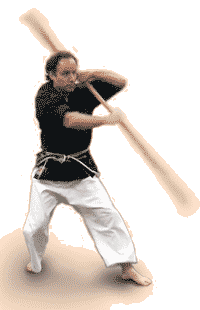 Our Head Instructor, Sensei John Dombeck, PhD.,
has spent the better part of the past two decades studying the elite Okinawan
style of Matayoshi Kobudo. In addition he
has also spent that time studying the incredible weapons arts (Zen
Okinawan Kobudo) of the head of our karate style, the renowned Master
Tadashi Yamashita, as well as training in a variety of other
traditional weapon arts. These three traditions form the basis of
the Budo Weapon Arts Program.
Our Head Instructor, Sensei John Dombeck, PhD.,
has spent the better part of the past two decades studying the elite Okinawan
style of Matayoshi Kobudo. In addition he
has also spent that time studying the incredible weapons arts (Zen
Okinawan Kobudo) of the head of our karate style, the renowned Master
Tadashi Yamashita, as well as training in a variety of other
traditional weapon arts. These three traditions form the basis of
the Budo Weapon Arts Program.
Empty-hand Martial arts experience
is strongly suggested but not required, and practitioners of
other empty-hand styles are more than welcome (although it is customary
to obtain permission from one’s instructor before training at another
dojo). The program also offers teaching certification in the various weapons
for interested instructors. Teenagers (13+) and older children (10+) with
sufficient martial discipline, generally brown belt in our empty hand
karate-do or black belt at most other schools, may also learn beginner-level
weapons with parental permission. Some weapons may have more strict age
requirements.
New students start with Beginner weapons (First Bo Staff,
then Sai, Tonfa, Nunchaku and NiTanbo). Later on, you may continue perfecting
the practical, extensive training in those weapons or choose to add additional
weapons to your studies.
Learn
More About the
Difference in Weapons Arts at Budo
Weapons in the program include:
Beginning weapons:
Bo
(6’ Staff)
Tonfa (Wooden Handled Nightsticks)
Sai
(3-Pronged Iron Truncheons)
Knife
Nunchaku (2 Short Sticks w/ Rope or Chain)
Nitan Bo (2’-3’ Stick(s))
Bokken/Sword
(sword training with a wooden sword)
Fist Load Weapons (Tetsuko,
Pocket Stick, etc)
Jo
(4’ Staff)
Ieku
(Boat Oar)
Katana (Samurai Sword (Iaido & Combat))
Kama
(Sickles)
Balisong
(Butterfly Knife)
Flexible Weapons
(Belt, Towel, Rope, etc)
Advanced Weapons:
Nunti-Bo
(Fisherman’s Spear)
Kuwa
(Hoe)
Timbei
(Short Sword and Shield)
San Setsu Kun
(3-Sectional Staff)
Yari
(Warrior's Spear)
Naginata
(Halberd / Bladed Polearm)